

Unraveling the Secrets of Longevity: The Role of Replication Protein A in Telomere Maintenance
A New Perspective on Aging
As I sit down to explore the complexities of aging, a recent study from the University of Wisconsin–Madison captures my attention. It challenges our understanding of chromosome stability and its connection to diseases that disrupt our lives. Researchers have unveiled a critical new role for human replication protein A (RPA), a protein traditionally associated with DNA replication and repair. Now, this protein is also recognized as essential for stimulating telomerase—an enzyme vital for maintaining telomeres, those protective caps at the ends of our chromosomes. This revelation not only illuminates previously unexplained mutations related to shortened telomeres but also opens up exciting possibilities for diagnosing and treating diseases linked to telomere dysfunction.
The Protective Nature of Telomeres
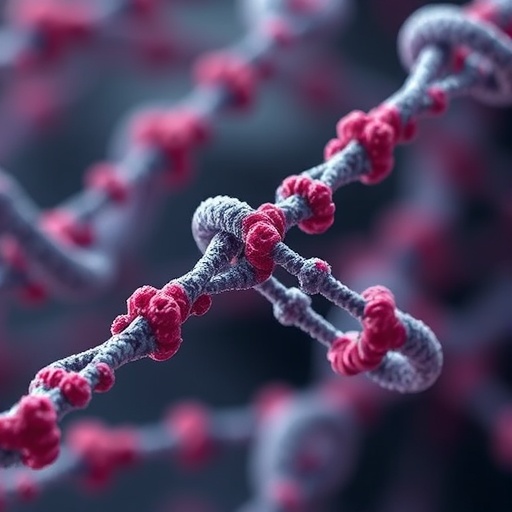
Telomeres feel like nature’s way of safeguarding our cellular clock, don’t they? These repetitive sequences shield chromosome ends from deterioration, preventing them from fusing with neighboring chromosomes. However, I often wonder about the price we pay as we age: our telomeres gradually shorten—a process intricately tied to cellular aging and death. When maintenance falters prematurely, it can lead us down a path filled with genomic instability and conditions like cancer or bone marrow failure syndromes.
I remember my grandmother’s struggle against illness; she embodied resilience yet faced health challenges that seemed beyond her control. Looking back now, I am struck by how such disorders could be tied to something as fundamental as telomere length—the very essence that keeps our cells functioning properly.
Decoding RPA’s Role
Led by Professor Ci Ji Lim, researchers harnessed advanced computational biology tools to delve into RPA’s interactions with human telomerase. They employed AlphaFold—an impressive machine learning platform—to predict how proteins interact within cells. Surprisingly, RPA emerged as a significant player in promoting telomerase activity. Although known for binding single-stranded DNA during replication, RPA had never before been confirmed to influence telomerase directly.
This discovery has me reflecting on how interconnected life processes are at their core; just when you think you’ve figured one piece out, another complicates the puzzle further! The study postulates that RPA’s interaction with telomerase is crucial for maintaining healthy telomere lengths in human cells—a realization both profound and hopeful.
Clinical Implications
The implications of this research reach far beyond academic curiosity; they ripple through real lives affected by shortened telomere syndromes lacking clear genetic diagnoses. Here lies a pivotal moment in understanding these enigmatic cases: mutations disrupting RPA’s ability to stimulate telomerase offer potential explanations for many patients’ struggles.
I find myself imagining conversations between doctors and patients—those moments where mysteries intertwine within clinical walls—and I wonder if this breakthrough will lead us toward more targeted treatments tailored specifically to individuals based on their unique molecular profiles.
The thought brings me hope; perhaps soon testing for mutations affecting RPA or its interaction with telomerase could become standard practice in diagnosing disorders related to aging biology—steps toward precision medicine that resonate deeply within me as an advocate for longer healthy lifespans.
A New Era in Molecular Biology Research
This study epitomizes how artificial intelligence can enrich biological understanding—a blend where computational predictions are substantiated through bench experiments—a symbiotic relationship leading us closer to unveiling hidden layers of cellular regulation connected intricately with aging and disease pathology.
I’ve often pondered over technology’s role in unlocking these secrets; seeing AI serve not just as an advanced tool but as a collaborator sparks awe within me about what could lie ahead in molecular research realms!
The Broader Biological Context
Reflecting on this discovery further invites contemplation about fundamental biological processes: placing RPA at the nexus between DNA replication and elongation gives new meaning to how cellular functions converge over time towards genomic stability—or instability—in our lives. How do these intricate dance steps contribute not just toward aging but also malignant transformation?
“This unfolding narrative invites fresh perspectives on therapeutic targets amid complex interactions governing longevity.”
A Collaborative Approach Beyond Borders
This groundbreaking work extends its roots into multidisciplinary collaboration involving molecular biochemistry alongside structural biology—all united under one common goal: deciphering life’s intricate code while seeking meaningful clinical advancements stemming from it!
I’m reminded once again why curiosity fuels scientific progress—every question leads us deeper into uncharted territories where answers not only enlighten minds but transform futures too.
A Reflection on Our Shared Journey Through Aging
This journey through research reminds us all that each thread woven into the fabric of life plays an essential role—even those invisible connections we may overlook daily contribute significantly toward creating meaning amid uncertainty surrounding longevity itself.
Finally, contemplating what lies ahead excites me immensely! What if future studies reveal how other known DNA repair proteins influence not only cancer outcomes but also enhance regenerative capacities across diverse ages? As scientists dissect these relationships further down this winding path ahead—the interplay between science and lived experience becomes richer than ever before.
Written for Aging Decoded – The Future of Health News, One Story at a Time.