


A Robotic Revolution in Surgery: A Personal Reflection
A New Era at Southern Vermont Medical Center
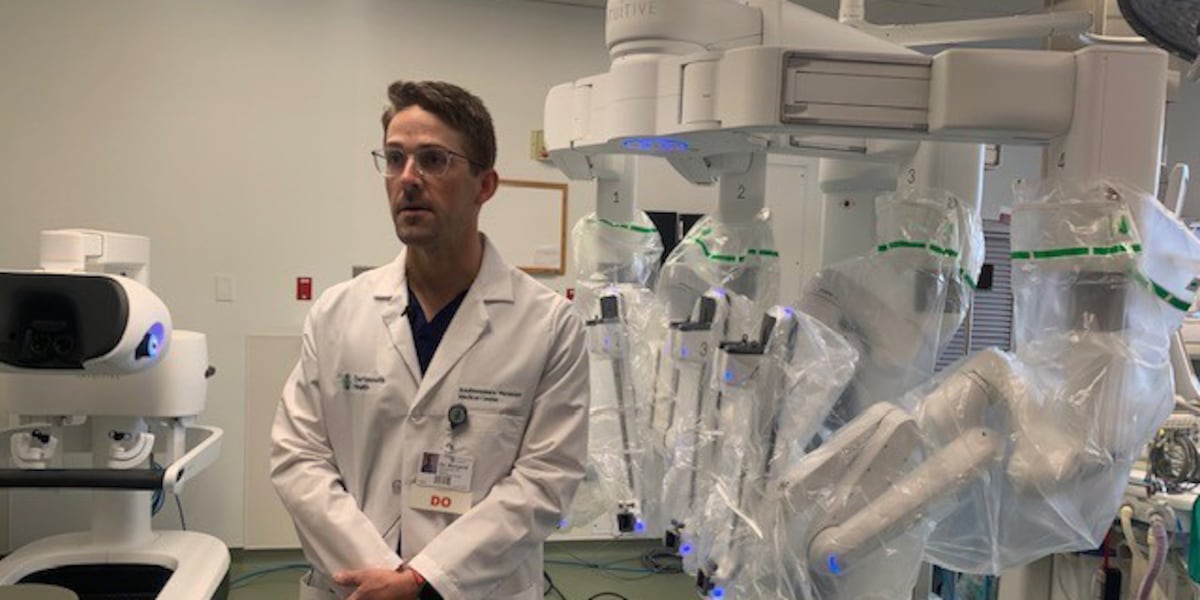
As I hear about the introduction of the Da Vinci IV surgical robot at Southern Vermont Medical Center (SVMC) in Bennington, I can’t help but feel a sense of excitement and apprehension. This new helping hand for surgeons promises to lower healthcare costs while keeping patients closer to home—a crucial factor for many who might otherwise seek treatment far away. The advent of robotic-assisted surgery isn’t just a technological advancement; it feels like a turning point for our community’s health care.
The Human Touch Behind Technology
Dr. Seth Bernard, who leads the hospital’s surgery department, describes how this technology enables him to guide instruments with unparalleled precision. He explains that larger surgeries usually require extensive incisions, leading to longer recovery times. “This is going to reduce those large incisions,” he says. “Patients will go home sooner; they’ll heal quicker.” As someone who’s witnessed both traditional and robotic surgeries—each with its own merits—I find his enthusiasm infectious.
I still remember my first encounter with robotic surgery when a family member underwent such a procedure years ago. The sight of the surgeon flawlessly maneuvering tools from afar felt surreal—almost like watching a conductor lead an orchestra where each note mattered deeply for healing. It was then that I realized how technology could enhance not just efficiency but also patient outcomes.
The Financial Implications
The cost of this sophisticated machinery is estimated at around $2 million—a hefty price tag that raises questions about whether we are investing wisely in our future healthcare landscape. But rather than paying up front, SVMC opts for a payment structure based on usage, suggesting a more sustainable financial model in an age where healthcare expenses often spiral out of control.
“Our outcomes are as good as anyone’s,” says Thomas Dee, SVMC’s CEO and president. “So, I think this is a win-win for the patients, for the hospital, and for healthcare affordability.”
This approach intrigues me—it makes me wonder if we’re approaching healthcare financing all wrong by focusing solely on upfront costs rather than long-term value and results.
A Magnet for Talent
This new technology doesn’t just promise better patient experiences; it’s also an essential recruiting tool in today’s competitive medical landscape. Dee notes that young surgeons want facilities equipped with cutting-edge tools; they do not wish to step back into what feels like antiquity by choosing less advanced environments. What does it mean when we consider that our ability to attract talent hinges on our capacity to leverage modern technology? Is there something unsettling about needing robots or devices as bait?
Keen Eyes on Community Needs
An eye-opening statistic reveals that more than 6,000 patients currently seek treatment outside southern Vermont annually—an alarming number indicative of gaps within local healthcare options. With hopes pinned on retaining these patients closer to home using innovative technologies like the Da Vinci IV system, there remains an underlying question: Are we prepared ethically and logistically to meet those needs? Dr. Bernard encapsulates this sentiment perfectly: “The last thing we want is for our community or our patients is to have to leave to seek the operation they need.” His words resonate deeply with me because they’re rooted in care—the kind that’s often overshadowed by technologic marvels.
The First Surgical Step Forward
The anticipation surrounding Monday’s first use of the robot fills me with both hope and skepticism—a mix that’s becoming familiar as I navigate through numerous innovations reshaping medicine today. How effective will it truly be? Will it deliver on all its promises? Only time will reveal answers.
A Personal Reflection on Innovation’s Pace
I’ve grown increasingly aware that every innovation carries weight beyond mere convenience or efficiency; it shapes human experience itself—how we define compassion in medicine and what it means when machines play roles once held exclusively by humans. There’s comfort in knowing that advancements can make surgeries less invasive while potentially saving lives—all rooted within precision-driven realities we never thought possible.
I can’t shake off my curiosity regarding where this journey takes us next: What if we become too reliant on these technologies? Are there risks involved when machines penetrate more personal aspects of care? Perhaps we’ve gone too far—or maybe not far enough—and therein lies my conundrum as I witness medicine evolving before my eyes.
Written for Aging Decoded – The Future of Health News, One Story at a Time.