


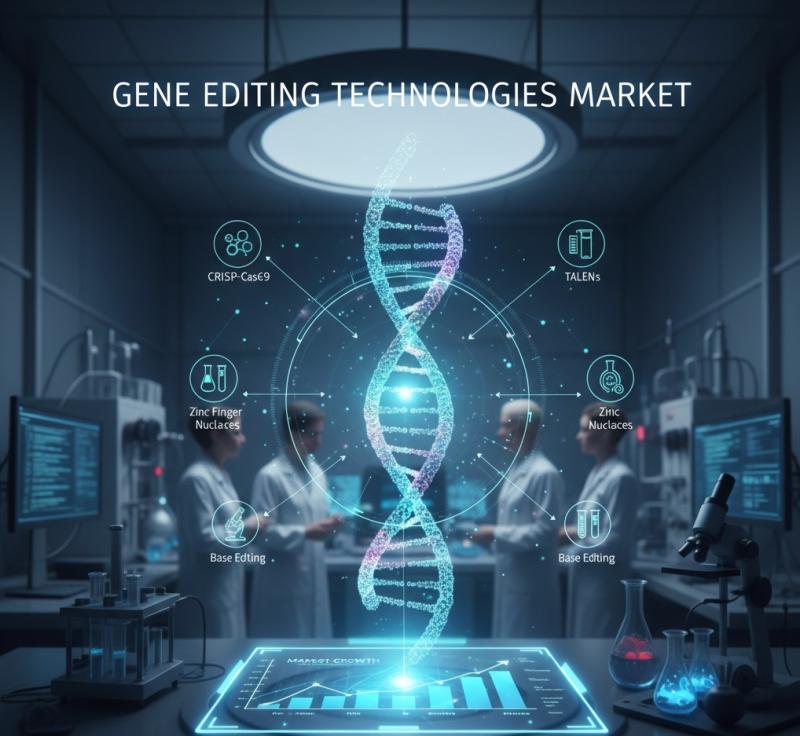
The Promise and Pitfalls of Gene Editing Technologies
As a health journalist who has witnessed the digital transformation in medicine, I find myself reflecting on the revolutionary potential of gene editing technologies. This field is brimming with hope and promise, offering solutions that could redefine our approach to genetic disorders and personalized medicine. Recently, a comprehensive global market study on gene editing technologies caught my attention, revealing not just the staggering growth projections but also the intricate tapestry of challenges, ethical dilemmas, and opportunities that lie ahead.
Market Dynamics: A Rollercoaster of Growth
The analysis presented by HTF Market Intelligence reveals that the global gene editing technologies market is poised for explosive growth—from $10.5 billion in 2025 to an anticipated $25.4 billion by 2033. This translates into a compound annual growth rate (CAGR) of 19.2%. While these numbers are certainly impressive, they prompt me to wonder: Are we prepared for what such rapid innovation entails? What does this mean for healthcare equity or access?
With key players like CRISPR Therapeutics and Editas Medicine leading the charge alongside emerging companies like Beam Therapeutics and Precision BioSciences, it’s evident that the landscape is becoming increasingly competitive. The study emphasizes how major geographical markets—North America holds a dominant position while Europe emerges as the fastest-growing region—are driving forces behind this revolution.
Understanding Gene Editing: More Than Just Science
At its core, gene editing represents a leap forward in our ability to interact with DNA—the blueprint of life itself. Techniques such as CRISPR-Cas9 allow researchers to make precise alterations at specific locations within an organism’s genome; think about it—the quiet hum of machines working tirelessly to rewrite genetic codes as if they were words on a page. This transformative capability carries significant implications not only for treating genetic disorders but also for enhancing agricultural practices.
“Gene editing stands at the intersection of hope and uncertainty.”
I still wonder about the ethical ramifications surrounding these advancements. As we venture into realms where humans can essentially rewrite their own genetic narratives or those of other species, have we paused long enough to consider the long-term consequences? Can technology become so powerful that it morphs into something unrecognizable—or even dangerous?
Market Trends: A Double-Edged Sword
The trends shaping this sector are fascinating yet complex; there’s an undeniable surge in demand for CRISPR-based techniques across various applications ranging from biotechnology to pharmaceuticals and beyond. However, there lies an undercurrent of skepticism regarding regulation—high barriers often restrict accessibility for smaller entities looking to innovate.
This brings me back to another area where I feel conflicted: The high cost associated with advanced gene editing technologies often limits affordability for many patients worldwide. Will this result in increasing disparities in healthcare access? The fear lingers that only those with considerable means will reap the benefits while others remain sidelined.
Navigating Challenges: Ethics Meets Innovation
Challenges abound within this rapidly evolving field; high regulatory hurdles create bottlenecks limiting market entry points while ethical considerations around human gene editing slow down adoption rates further still. Yet amidst these hurdles lie fertile grounds ripe for innovation—a paradox worth unpacking.
I recall speaking with researchers who expressed both excitement and trepidation about their work’s implications on humanity’s future trajectory; after all, technological advancements come hand-in-hand with moral responsibilities that weigh heavily on scientists’ shoulders today more than ever before.
A Landscape Rich with Opportunities
Despite these challenges—and perhaps because of them—the opportunities remaining are tantalizingly abundant! Corporate partnerships between established biotech firms foster collaborative environments where innovative ideas can thrive without excessive constraints imposed solely by regulatory bodies alone.
A Future Unveiled: Personalized Medicine Beckons
The rise of tailored treatments through genomic insights paves paths toward personalized medicine previously thought unattainable—a service model driven not just by profit margins but rather compassionately aimed at addressing rare diseases plaguing communities worldwide!
A Closing Thought
Beneath all this data lies something profoundly human—we are creators engaged in redefining what it means to be alive today amid unprecedented advancements fueled largely by scientific inquiry intertwined closely with ethics-driven conversations shaping societal expectations moving forward!
Written for Aging Decoded – The Future of Health News, One Story at a Time.