
Facing the Aftermath of COVID: My Journey Through Post-COVID Recovery
The Hidden Challenge of Post-COVID
I never anticipated that emerging from a battle with COVID-19 would lead me into another, more insidious struggle: post-acute COVID-19 syndrome. It feels surreal to think about how many obstacles linger even after you’ve kicked the virus to the curb. You hear terms like “next national health disaster” and “pandemic after the pandemic”—and you wonder if you’re living it.
The Centers for Disease Control and Prevention describes post-COVID not as one single condition but rather a constellation of symptoms—new, returning, or ongoing health issues that can haunt those who have survived an infection. For me, this wasn’t just jargon; it was my reality.
“Post-COVID is difficult to define because it encompasses a very wide range of symptoms,” Dr. Bradley Sanville, a pulmonary physician at UC Davis Health’s Post-COVID Clinic, explained to me during one of my visits. I sat in his office feeling both grateful for his expertise and frustrated by my own confusion—why was recovery so complicated?
A Growing Epidemic
I belong to a growing group—an estimated 16 million working-age adults in the United States grappling with physical and mental disturbances from post-COVID. It’s astonishing yet disheartening to think about how many people share this burden alongside me: fatigue that seeps into your bones, difficulty breathing as if someone has placed a weight on your chest, cardiovascular abnormalities that make every heart race feel like an alarm bell.
You start questioning everything—Is this just fatigue? Or is it something more sinister? Am I imagining things? The uncertainty lingers like an unwelcome house guest.
Pursuing Treatment
If you’re anything like me, you crave answers and solutions when faced with challenges. But here’s where it gets tricky: there isn’t really a standard treatment protocol for post-COVID yet. Instead, clinicians are piecing together traditional treatments—like pulmonary rehabilitation for breathlessness or occupational therapy for brain fog—to help us reclaim our lives.
“Some patients are reluctant in the beginning… afraid rehab might cause harm,” Dr. Sanville pointed out. It resonated with me; I too had hesitations about starting rehab exercises only to find myself utterly surprised by what my body could still endure.
I remember my first session—a mix of fear and hope swirling inside me as I was encouraged to push through discomfort while connected to machines measuring my heart rate and oxygen levels.
It felt vulnerable yet empowering all at once—a paradox I’m still trying to sort through.
Pulmonary Rehabilitation: A New Way Forward
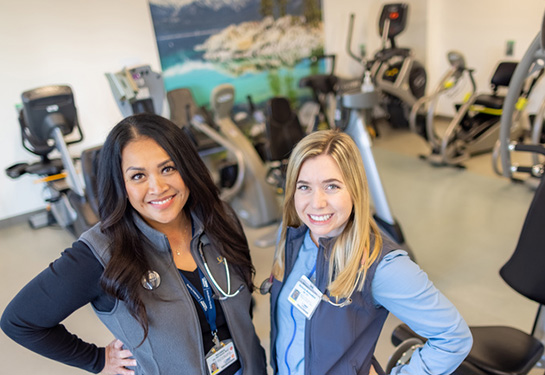
Sitting in sessions led by respiratory therapists Veronica Encarnacion and Mallorie Mullendore at UC Davis Health’s Pulmonary Rehabilitation Program has become part of my routine since early 2021—a lifeline amidst chaos. The program focuses specifically on patients facing lingering effects from COVID-19.
Mallorie candidly shared her experiences treating chronic fatigue among post-COVID patients like myself: “Other lingering issues include dizziness…shortness of breath,” she noted empathetically while we practiced seated exercises using Therabands and light weights.
“It is slow and long process…but we are seeing these therapies support our post-COVID patients,” Veronica added with palpable conviction. Her words were both reassuring and sobering—the journey ahead remains strewn with uncertainties.
The Path is Not Linear
I often find myself oscillating between frustration over slow progress and moments of gratitude for small victories—like completing an exercise without gasping for air or realizing that I no longer need supplemental oxygen where I once depended on it heavily during workouts.
This rehabilitation experience isn’t just about physical recovery; it’s emotional too—the sensation of being treated as whole person rather than just another patient on a long list resonates deeply within me. Yet there’s also guilt creeping in at times—I shouldn’t be complaining when others face far greater struggles—but then again, everyone’s story matters…
The Future Is Uncertain but Hopeful
The specter of long COVID looms large; even now as cases continue cropping up everywhere around us while wearing masks feels obligatory but also incredibly exhausting sometimes! Many young individuals who were seemingly healthy before contracting Covid-19 now find themselves struggling daily—and knowing they exist makes this fight feel less lonely somehow.
I believe respiratory therapists will play an essential role moving forward in treating those suffering from post-Covid conditions—as they possess unique skills tailored toward optimizing lung function through breathing retraining techniques paired alongside medication management strategies which may yield significant improvements! Still though…we remain wading through murky waters regarding what causes these conditions altogether!
“There is still so much that is unknown about the cause,” Mullendore remarked thoughtfully during one session—noting we must continue supporting these patients despite ambiguity surrounding their ailments offers reassurance along this bumpy road ahead!
A Journey Together
Certainly each day brings its own blend of struggles intertwined with glimmers hope—but maybe that’s what makes resilience shine brighter against daunting odds! It’s multiple voices coming together sharing stories alongside their individual battles transforming them into collective strength—which ultimately reminds us redefining normalcy takes time…and compassion toward ourselves first along way!
Written for Aging Decoded – The Future of Health News, One Story at a Time.