


Embracing Balance: The Power of Movement for Lifelong Vitality
Navigating the Dance of Strength and Stability
When I think about strength, mobility, and balance, I reflect on my lifelong journey with movement. There was a time when exercise felt like a chore—something to endure rather than embrace. However, understanding the intricate dance between these elements has transformed my perspective. As I explore the principles behind elliptical wobble boards, I’m reminded that balance is not just a physical necessity; it’s a metaphor for life itself.
The Geometric Dance of Movement
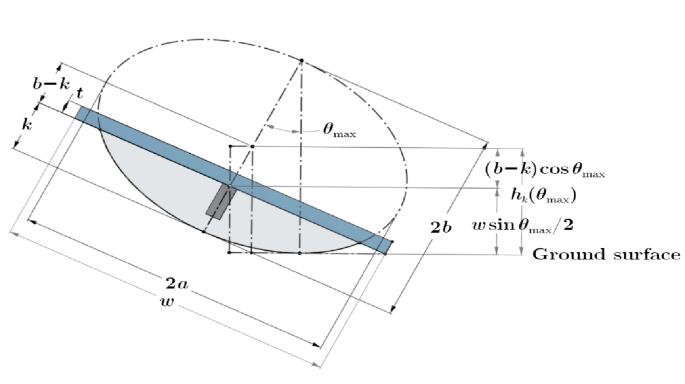
Two sets of parameters characterize wobble boards: geometric and physical. Each plays a crucial role in maintaining stability while engaging in movements that challenge our bodies and minds.
-
(a): The horizontal semi-axis defines how wide the board feels underfoot.
-
(b): The vertical semi-axis gives us an idea of how high we can tilt before losing balance.
-
(rho = frac{b}{a}): This aspect ratio illustrates how proportions influence our ability to stabilize.
-
(A): The area of the truncated base affects where our center of gravity lies as we perform movements.
I find it fascinating how these measurements impact not just performance but also confidence as we navigate different exercises. For instance, stepping onto a wobble board with an altered width or height can bring forth an exhilarating mix of fear and excitement—a reminder that every little adjustment challenges us to grow stronger.
The Physical Parameters at Play
The physical attributes come into play as well:
-
(M): Mass influences our sense of grounding during movement; too light may feel unstable, while too heavy might limit agility.
-
(I_text{G}): The moment of inertia determines how easily we can pivot or rotate on the board, affecting our control.
This interplay between geometry and physics often reminds me of those moments in training when everything clicks—when your body moves effortlessly through space. But there are days when fatigue creeps in; inconsistency rears its head. It’s on those days that recognizing the importance of both strength and precision becomes vital for achieving balance—not just physically but mentally too.
The Support Function: Finding Our Grounding Point
The support function is fundamental to understanding instability on wobble boards. It measures how far we can lean before tipping over—a clear analogy for life’s balancing act. With every tilt and sway, we’re challenged to maintain equilibrium against external forces—much like navigating everyday stressors.
“The support function geometrically measures the perpendicular distance from the origin to supporting lines.”
This concept resonates deeply with me because I often see parallels within my own challenges outside fitness—whether it’s managing work-life balance or emotional turbulence. Just as I adjust my position on a wobble board to stay upright, I seek tools in life that help maintain my equilibrium through adversity.
Pushing Boundaries: Maximum Tilt Angle
A pivotal moment arises when discussing maximum tilt angles—the point at which we risk falling off course (or falling outright). Achieving this threshold requires awareness:
- The position where contact occurs dictates whether we remain stable or tumble down into chaos.
- The height from which we launch ourselves impacts our momentum significantly.
- A platform extension prompts consideration about safety margins during dynamic movements.
This notion strikes me as essential not only in exercise but also while coping with life’s myriad transitions. Standing tall amidst uncertainty requires knowing precisely when to lean into discomfort—and when it’s time to step back cautiously before testing limits again.
Cultivating Resilience Through Oscillation Analysis
Diving deeper into oscillation analysis reveals insights about our natural frequencies—the rhythms unique to each individual based on personal history with movement patterns:
“Increasing clearance reduces natural frequency leading towards more stable dynamics.”
I’ve experienced firsthand what it feels like stepping onto unfamiliar terrain during rehabilitation—it can be daunting yet empowering simultaneously! You learn quickly that even small adjustments profoundly affect your response capacity—for better or worse!
A Holistic Approach: Understanding Rehabilitation Phases
Navigating rehabilitation encompasses phases akin to tuning musical instruments—fine-tuning until harmony emerges:
-
li >
li >
Each stage signifies another layer added towards resilience—in both body AND mind—as muscles strengthen alongside newfound confidence stemming from conquering fears associated with instability.
That said, sometimes setbacks appear sudden; motivation dips unexpectedly leaving one questioning their resolve amid trials faced on this journey called fitness… But no experience goes unwasted if approached thoughtfully!
In closing—and perhaps most importantly—I remind myself continually why this pathway matters so dearly: Movement is indeed more than mere muscle memory; it embodies growth potential radiating throughout every facet of existence! Whether training alone at home or surrounded by others seeking similar aspirations—we share common threads woven tightly together reminding us all why these concepts resonate profoundly within the human experience…
After all? We’re not merely chasing after perfection — instead embracing LIFE via STRENGTH & MOVEMENT coalescing harmoniously along this beautifully chaotic ride toward growth!
written for Aging Decoded – The Future of Health News, One Story at a Time.